
Waterproofing Your Home: A Complete Guide to Preventing Roof Leakage, Damp Walls and Water Damage
Water can quietly damage a house long before the problem becomes visible. A small damp patch on a bedroom wall, peeling paint near the ceiling or a persistent leak from the terrace may appear to be minor maintenance issues. However, these symptoms can indicate a deeper problem involving drainage, cracks, plumbing or an ineffective waterproofing system.
For homeowners in Hyderabad, protecting a building against moisture is an important part of maintaining its comfort, appearance and long-term durability. Seasonal rainfall, intense sunlight and temperature changes can expose weaknesses in roofs, external walls, balconies and other vulnerable areas.
The solution is not simply to apply a waterproof coating wherever a stain appears. Effective waterproofing begins with identifying the source of water, understanding the surface condition and selecting an appropriate system for the specific location.
At Dream Project Constructions, we believe that good construction involves preventing problems wherever possible rather than repeatedly repairing their visible symptoms.
In this guide, we explain the common causes of water leakage, the areas that need protection, the different waterproofing methods and the practical steps homeowners should understand before starting repairs.
1. What Is Waterproofing and Why Does Your Home Need It?
Waterproofing is the process of preventing unwanted water penetration through building elements using suitable materials, detailing and construction methods.
Depending on the location, a waterproofing system may involve a liquid-applied membrane, a sheet membrane, cementitious coatings, water-resistant detailing or an integrated combination of protective measures.
The correct solution depends on whether the building element is exposed to rain, standing water, plumbing leakage, ground moisture or water pressure.
Proper waterproofing can help homeowners:
- Reduce recurring roof and ceiling leakage.
- Protect internal finishes from moisture damage.
- Limit dampness caused by water penetration.
- Protect vulnerable building elements.
- Reduce avoidable repair and repainting expenses.
- Maintain a healthier, more comfortable indoor environment.
However, waterproofing does not replace structural repairs, plumbing maintenance or proper drainage. Each of these must be addressed when it contributes to the problem.
2. Common Signs That Your House Needs Waterproofing
Recognising early warning signs can help prevent a minor defect from becoming a costly repair.
Damp patches on ceilings
Brown stains, bubbling paint or plaster deterioration on a ceiling may indicate terrace leakage, a plumbing defect or water entering through an exposed junction.
The location of the stain does not always reveal the exact entry point. Water can travel along slabs, pipes and other surfaces before becoming visible indoors.
Peeling paint and bubbling plaster
When moisture accumulates behind a painted surface, the paint may blister, peel or lose adhesion. White salt deposits may also appear on masonry or plaster.
Before repainting, investigate whether the moisture comes from external rainwater, plumbing, ground moisture or condensation.
Leakage around windows
Rain can enter through deteriorated sealant, poorly detailed window frames, cracks or defects where the frame meets the surrounding wall.
Inspect these junctions carefully, especially on elevations exposed to wind-driven rain.
Dampness near the floor
Moisture near the bottom of a wall may originate from ground moisture, defective plumbing, water trapped outside the building or inadequate external drainage.
Applying a surface coating without investigating the cause can lead to recurring dampness.
Musty odours and persistent indoor moisture
Persistent moisture can encourage mould growth on suitable surfaces. If a room repeatedly smells damp, inspect for hidden leaks, condensation and insufficient ventilation.
The important principle is simple: diagnose the source before choosing the treatment.
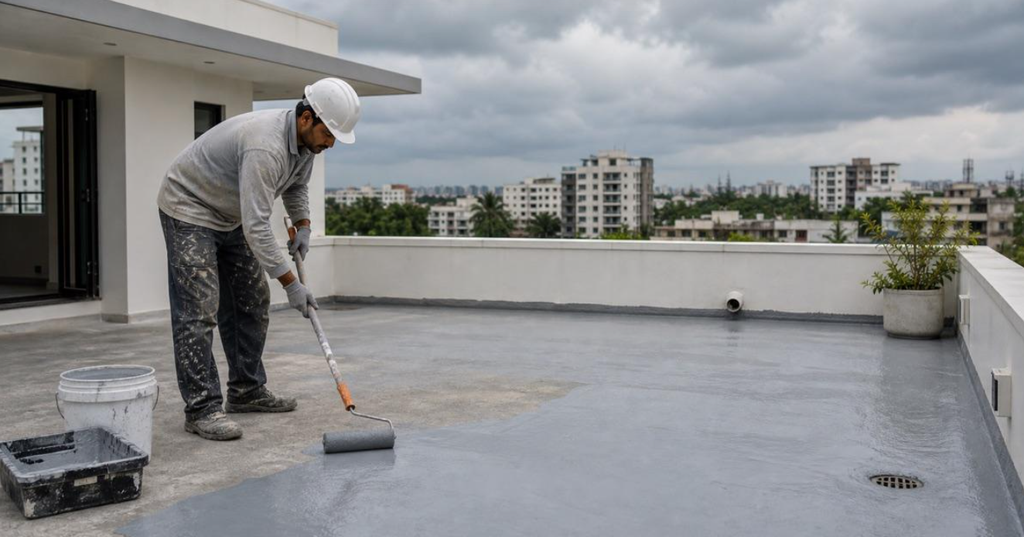
3. Terrace Waterproofing: Protecting the Roof Above Your Head
Terraces are among the most exposed parts of a building. They experience direct rainfall, intense sunlight, temperature changes and repeated wetting and drying.
Even a small defect around a drain outlet or wall junction can allow water to enter the building.
Common terrace leakage causes
Typical causes include:
- Cracked or deteriorated waterproofing layers.
- Poor drainage slopes or blocked rainwater outlets.
- Defective detailing around pipes and parapet walls.
- Cracks in the underlying surface.
- Damage caused by later drilling or installation work.
- Incompatible materials or improper application.
How terrace waterproofing should be approached
First, inspect the terrace and identify visible cracks, low spots, blocked outlets and damaged junctions.
Next, determine whether the existing waterproofing layer can be repaired or whether it needs more extensive replacement. The decision depends on the condition of the substrate, the existing system and the source of leakage.
The surface must be prepared according to the selected product’s requirements. Loose material, contamination and unsuitable coatings may need to be removed.
The waterproofing material should then be installed with particular attention to corners, pipe penetrations, outlets and other vulnerable junctions.
Drainage falls must be checked as part of the overall solution. A waterproof membrane cannot compensate for a terrace that repeatedly holds standing water when the system is not designed for such conditions.
Finally, complete the specified inspection or water test before installing protective layers or finishes. Any testing must be performed safely and in accordance with the system requirements.
4. Bathroom and Balcony Waterproofing
Bathrooms, utility areas and balconies are regularly exposed to water. Their waterproofing details are particularly important because water can enter adjoining rooms or damage ceilings below.
Bathroom waterproofing
A reliable bathroom waterproofing system must address the floor, wall-floor junctions, pipe penetrations and drainage outlets.
The sequence generally includes suitable substrate preparation, installation of the specified waterproofing system, treatment of corners and penetrations, inspection and required testing before tiling.
Tile joints and grout should not be treated as a substitute for a properly designed waterproofing layer.
If a bathroom is leaking into the room below, the cause may involve damaged waterproofing, plumbing connections, drainage defects or a combination of these issues. Investigate before removing tiles unnecessarily.
Balcony waterproofing
Balconies need suitable falls, functional outlets and correctly detailed connections to doors, walls and railings.
A common problem occurs when water collects near the doorway because the finished floor level, threshold and drain locations were not coordinated properly.
During renovation, the existing levels and drainage arrangement should be assessed before selecting a repair system.
5. External Wall Waterproofing and Dampness Treatment
External walls are exposed to rain, sunlight, dust and temperature changes. Cracks, defective joints and deteriorated finishes can create paths for water penetration.
However, not every damp wall requires the same treatment.
A wall affected by rain penetration may need crack repairs, improved joint detailing or a suitable exterior protective coating. A wall affected by plumbing leakage needs the plumbing defect corrected first.
Where ground moisture is involved, external ground levels, drainage and the building’s moisture-protection details may require investigation.
Steps for treating a damp wall
- Inspect the affected wall and nearby plumbing.
- Identify whether moisture is entering from outside, below or through an internal source.
- Repair defective joints, cracks or plumbing as appropriate.
- Allow the substrate to reach the condition required by the selected repair system.
- Apply compatible repair materials and protective coatings.
- Monitor the wall to confirm that the original moisture problem has been resolved.
Painting directly over damp plaster can conceal the symptoms temporarily without correcting the underlying cause.
6. Types of Waterproofing Methods Used in Residential Buildings
There is no single waterproofing product that is ideal for every building element. The material should match the exposure conditions, substrate, movement requirements and intended use.
Cementitious waterproofing
Cementitious systems are commonly used in selected wet areas, water-retaining structures and other applications specified by the manufacturer.
They can provide a practical solution when the substrate and service conditions are suitable. Surface preparation, correct mixing, application thickness and curing requirements are important.
Liquid-applied waterproofing membranes
These materials form a continuous protective layer after application and curing.
They can be useful for complex surfaces and detailed junctions when the selected system is compatible with the substrate and exposure conditions.
Application thickness, drying conditions, reinforcement requirements and protection from subsequent damage must follow the product specifications.
Bituminous membranes
Sheet membranes are used in selected roof, below-ground and other waterproofing applications.
Their suitability depends on the system design, substrate, installation conditions and required protection. Joints, laps, corners and penetrations need careful detailing.
Integral waterproofing admixtures
Certain admixtures are incorporated into concrete as part of an appropriately designed concrete system.
They may help improve resistance to water penetration, depending on the product and application. They do not eliminate the need for proper concrete quality, crack control, construction-joint detailing or other required protective measures.
Flexible coatings and protective systems
Some flexible coatings are designed to accommodate limited movement and protect selected surfaces against water penetration.
Their performance depends on the product’s intended use, substrate condition, exposure and application requirements.
Before selecting any material, verify that it is suitable for the exact application rather than relying only on a product’s general waterproofing label.
7. Why Waterproofing Repairs Often Fail
Repeated leakage after a repair is frustrating, particularly when the homeowner has already paid for materials and labour.
Several common mistakes can explain why a repair does not last.
Treating the stain instead of the source
A ceiling stain may originate from a terrace defect some distance away. Repairing only the plaster will not prevent water from entering again.
Ignoring drainage
Blocked outlets, insufficient falls and poor discharge arrangements can expose the waterproofing system to conditions it was not designed to handle.
Applying material over a poorly prepared surface
Dust, loose coatings, contamination and unsuitable moisture conditions can reduce adhesion or affect curing.
Using incompatible products
Applying a new coating over an existing material without checking compatibility can lead to poor bonding or premature failure.
Skipping inspections
Waterproofing details often become hidden beneath screeds, tiles or other finishes. Failing to inspect the system before covering it makes defects harder to identify and correct.
A successful repair requires proper diagnosis, suitable materials, controlled application and verification of the completed work.
8. Waterproofing During New House Construction Versus Renovation
The best time to plan waterproofing is before the relevant building element is concealed.
During new construction
Waterproofing can be coordinated with slab levels, plumbing routes, drainage outlets, wall details and finishing specifications.
This provides an opportunity to resolve conflicts before they become expensive alterations.
Homeowners should request clear specifications identifying the areas to be treated, the selected system, preparation requirements and inspection stages.
Photographs taken before the waterproofing layer is concealed can also provide a useful project record.
During renovation
Existing buildings require additional investigation because the source of leakage may not be immediately obvious.
The repair team may need to examine old coatings, cracks, plumbing, drainage and the condition of the underlying substrate.
The least expensive-looking repair is not necessarily the most economical option if it leaves the original cause unresolved.
The repair scope should explain what is being treated, why that treatment is appropriate and what limitations remain.
9. How to Choose a Waterproofing Contractor
Selecting a contractor should involve more than comparing the price per square foot.
Before proceeding, homeowners should ask:
- Will the contractor inspect and identify the source of leakage?
- Which waterproofing system is proposed, and why?
- What surface preparation is included?
- How will corners, joints, outlets and pipe penetrations be treated?
- What inspections or tests will be carried out?
- What protection is required after application?
- What warranty terms apply, and what exclusions are included?
- Will the contractor provide a written scope and payment schedule?
Requesting photographs of completed work and checking relevant experience can help with evaluation.
A written agreement should clearly define the treatment area, materials, preparation, application procedure, testing requirements and warranty conditions.
Avoid choosing solely on the basis of the cheapest quotation. A low initial price can become expensive if repeated repairs are necessary.
10. Practical Waterproofing Maintenance Checklist
Regular inspection can help identify defects before they cause extensive damage.
Before the rainy season:
- Remove debris from terrace outlets and accessible drains.
- Inspect visible cracks and deteriorated sealant.
- Check roof and balcony drainage arrangements.
- Examine ceilings and external walls for signs of moisture.
- Inspect accessible plumbing connections.
- Review previously repaired areas for recurring leakage.
During the rainy season:
- Observe whether water drains away as intended.
- Check for new damp patches after significant rainfall.
- Avoid unsafe access to wet roofs during storms.
- Arrange professional inspection when leakage persists.
After the rainy season:
- Review areas that experienced waterlogging or leakage.
- Repair damaged joints and finishes after the underlying cause is corrected.
- Document recurring problems and the repairs completed.
- Retain product information and available warranty records.
Maintenance needs vary according to the building, waterproofing system and exposure conditions. Follow the relevant manufacturer’s recommendations and obtain professional advice when defects are significant.
Conclusion: Protect Your Home Before Water Finds a Way In
Waterproofing is an important part of responsible building maintenance and residential construction. Yet its success depends on more than selecting a chemical or coating.
Correct diagnosis, sound detailing, suitable drainage, proper surface preparation and careful workmanship all contribute to a reliable result.
For homeowners in Hyderabad, addressing roof leakage, damp walls, bathroom seepage and drainage problems early can help prevent avoidable damage and recurring repair expenses.
At Dream Project Constructions, we believe that lasting construction quality comes from solving the underlying problem rather than repeatedly covering its symptoms.
Whether you are planning a new house, renovating an existing property or investigating persistent water leakage, begin with a careful assessment of the affected area and a clearly defined repair plan.
Need Waterproofing or Renovation Assistance?
Dream Project Constructions provides residential construction, civil work and renovation solutions with a focus on practical planning and workmanship.
Contact our team to discuss your property’s waterproofing requirements and determine the next steps for a suitable site assessment.
Dream Project Constructions
Plan. Build. Transform.
Frequently Asked Questions
1. What is the best waterproofing method for a house terrace?
The appropriate method depends on the existing substrate, condition of the roof, drainage arrangement and exposure. A site inspection helps determine whether a liquid-applied membrane, sheet membrane or another compatible system is suitable.
2. How can I stop water leakage from my ceiling?
Identify the source first. Terrace defects, plumbing leaks and other water-entry paths require different treatments. Repairing the ceiling finish alone will not resolve an ongoing leak.
3. Is waterproofing necessary in bathrooms?
A suitable waterproofing system is an important protective measure in bathrooms and other frequently wet areas. Particular care is required around drains, pipe penetrations and wall-floor junctions.
4. Can waterproofing be done without removing tiles?
Sometimes a surface treatment is possible, but its suitability depends on the source of leakage, the condition of existing finishes and the proposed system. Persistent leakage may require opening the affected area to inspect and repair concealed defects.
5. How long does waterproofing last?
Service life varies with the material, installation quality, exposure, maintenance and movement of the building element. Follow the manufacturer’s maintenance recommendations and review the specific warranty rather than assuming every system has the same lifespan.
6. When should I waterproof my house?
Ideally, waterproofing should be planned during construction, before the relevant finishes conceal the work. Existing buildings should be inspected and repaired when leakage or moisture problems are identified, with appropriate preparation and weather conditions for the selected system.